Compare · OES Spectrometers
F6000 Pro (XRF) vs F7000 Pro (LIBS) — JIEBO handheld analyzer comparison
The F6000 Pro and F7000 Pro are JIEBO's two handheld analyzer platforms, designed to cover complementary use cases. The F6000 Pro is an X-ray fluorescence (XRF) gun — fully non-destructive, ideal for fast alloy grade ID and PMI of finished components, but blind to light elements (Li, Be, B, C, Mg). The F7000 Pro is a laser-induced breakdown spectroscopy (LIBS) gun — measures those light elements, uses no ionizing radiation, but leaves a sub-millimeter laser mark and requires Class 3B laser safety procedures. The right pick depends on which elements you need, the destructive-test policy of the receiving site, and local radiation-import rules.
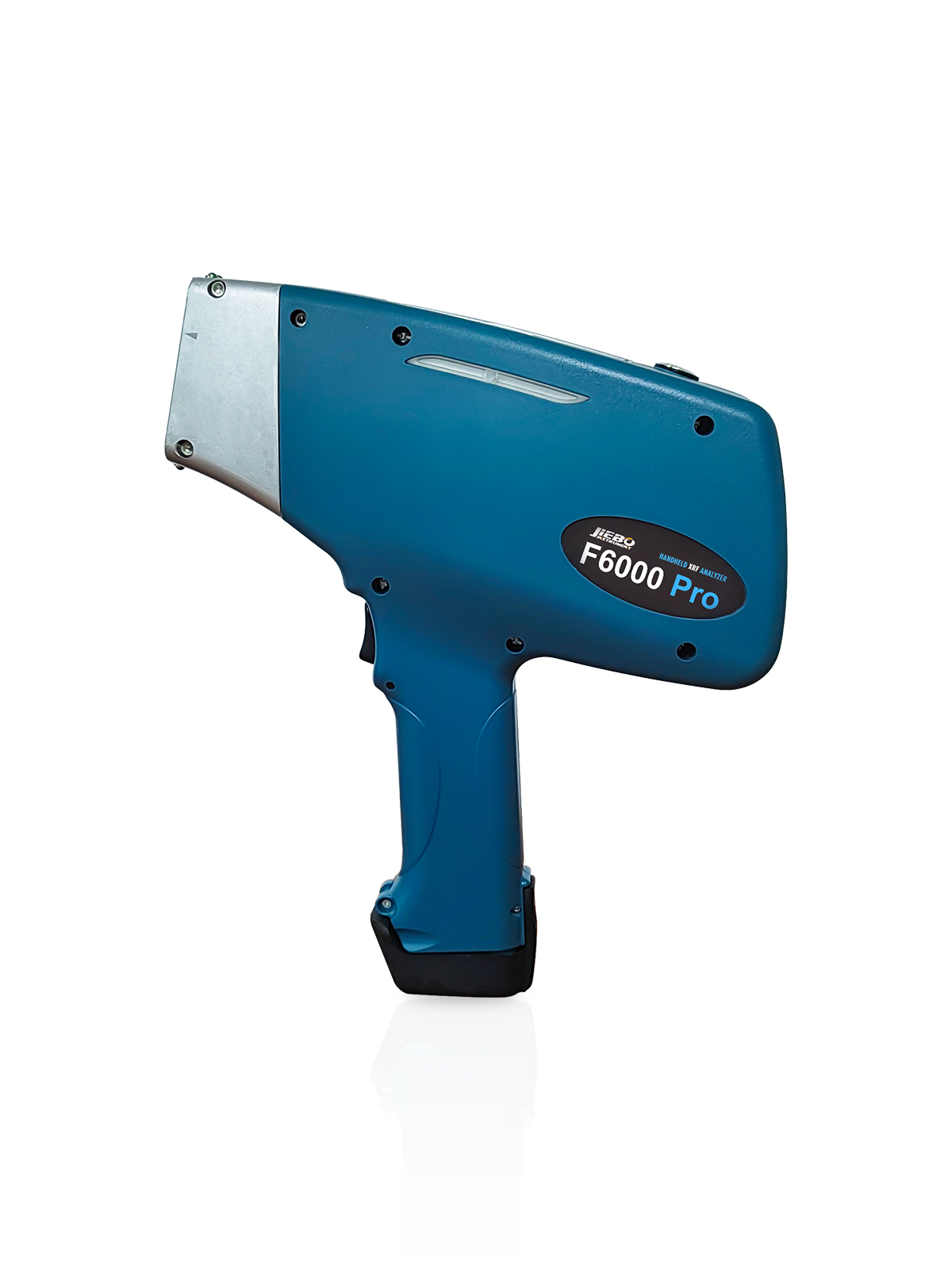
JIEBO-F6000
F6000 Pro (XRF)
Handheld XRF — Si-PIN detector, 50 kV X-ray tube, Ti to U, fully non-destructive
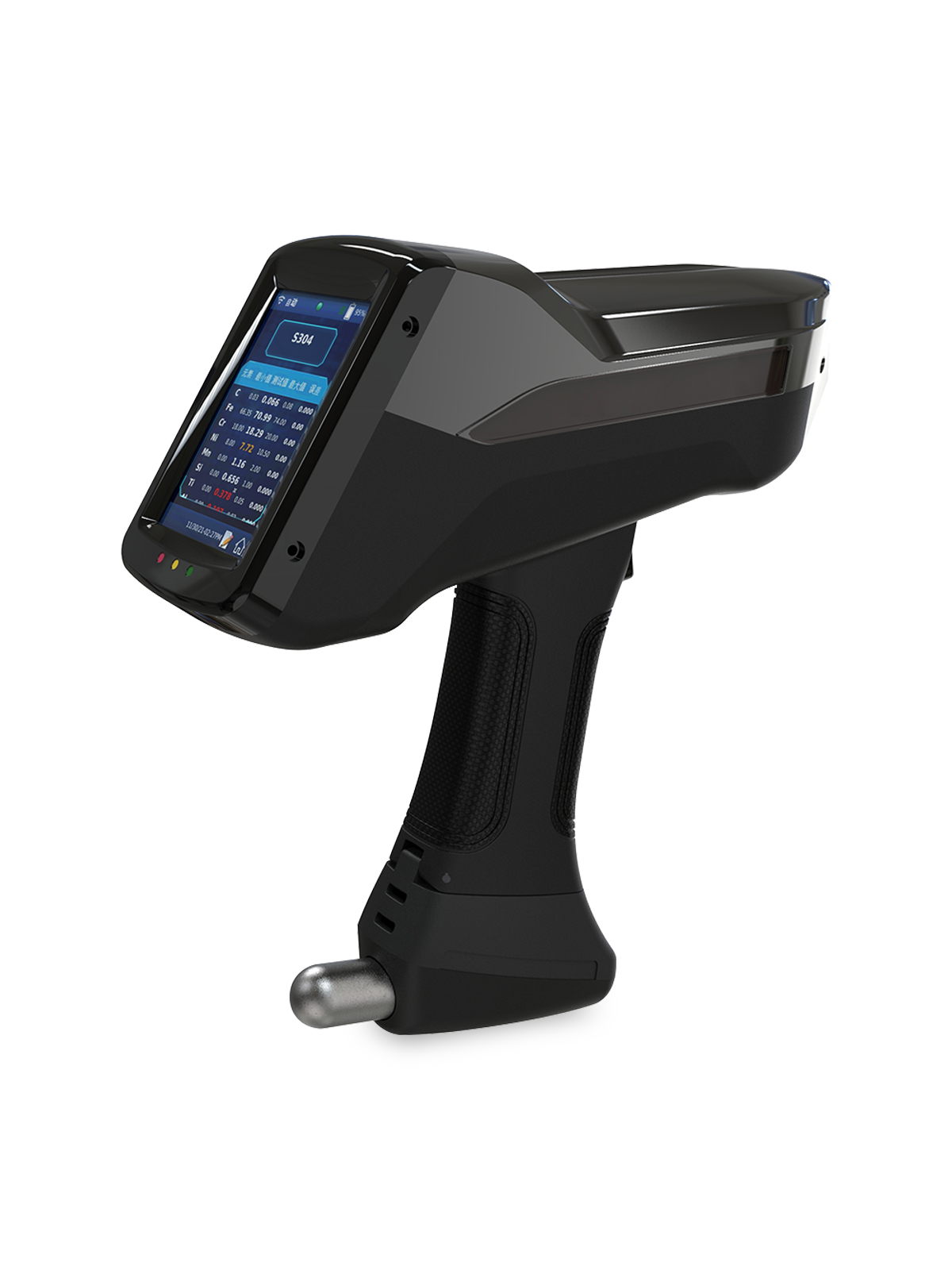
JIEBO-F7000
F7000 Pro (LIBS)
Handheld LIBS — Class 3B laser, light elements incl. Be & Mg, no ionizing radiation
Specifications
| F6000 Pro (XRF) | F7000 Pro (LIBS) | |
|---|---|---|
| Test methods | X-ray fluorescence (XRF) | Laser-induced breakdown spectroscopy (LIBS) |
| Detector | High-resolution Si-PIN | Optical spectrometer + Class 3B laser source |
| Excitation source | 50 kV / 100 mA / 4 W X-ray tube | High-energy pulsed laser, Class 3B |
| Elements analyzed | Ti to U (no Li, Be, B, C, Mg) | Be, Mg, Al, Si, Ti, Cr, Mn, Fe, Ni, Cu, Zn, Cd, Sn, Pb, Bi, Mo, V, Nb, W |
| Analyzing time | 1–5 s typical | < 1 s per measurement |
| Weight | Handheld gun form factor | 1.25 kg (incl. battery) |
| Operating temp / humidity | Operating up to 50 °C ambient | Optical/mechanical safety switches required |
| Best for | Non-destructive PMI, scrap sorting | Light-element ID, radiation-restricted sites |
When to choose which
Choose F6000 Pro (XRF) when
- You need fully non-destructive testing — no marks on the part are acceptable (finished components, certification, customer-owned material)
- Your element list lives above titanium (Ti to U): stainless, mold steel, brass, bronze, nickel alloys, precious metals
- Operators are already certified for radiation safety, or your country accepts handheld XRF under standard licensing
- Speed is the priority for high-volume scrap sorting and warehouse PMI — XRF is the industry default for this use case
Choose F7000 Pro (LIBS) when
- Your application demands light elements XRF cannot read: Li, Be, B, C, Mg, Al, Si — aluminum alloy sorting, beryllium-copper safety screening, battery materials
- Radiation import or licensing is restricted in your country and a non-radiation alternative simplifies regulatory paperwork
- A sub-millimeter laser mark is acceptable on the part (most receiving inspections and PMI workflows treat it as non-destructive in practice)
- You can implement standard Class 3B laser safety procedures (safety glasses, operator training, contact-required activation)
Frequently asked questions
Can one of these replace a benchtop OES like Innovate T5?
No. Both handheld units excel at fast field identification, but benchtop OES delivers ppm-level accuracy and full base-matrix coverage that handheld physics cannot match. The standard pairing is "handheld for sorting and receiving, benchtop OES for final certification."
F6000 Pro covers carbon and sulfur via XRF?
No. Handheld XRF physics cannot reliably quantify C, S, P or B. For C/S use the CS995 / CS996 combustion analyzers; for spark-based C/S use the Innovate T5 or the Surpass F1 mobile OES.
Does the F7000 Pro really replace XRF for scrap sorting?
Often, yes — especially for aluminum yards where Mg/Si content matters and for sites where the radiation paperwork for XRF is prohibitive. For ferrous and stainless yards, XRF is still faster on volume sorting because the F6000 Pro keeps the part fully untouched.
What import / licensing should I plan for in each country?
XRF (F6000 Pro): subject to nuclear/radiation regulators — IAEA-aligned regimes in GCC, Rostekhnadzor in Russia, CNSC-equivalent in Canada/Latin America. We supply CE/CB certificates and a radiation safety dossier; operator licensing is the customer's responsibility. LIBS (F7000 Pro): no nuclear regulator involvement; standard CE/CB and laser-safety documentation typically suffices.