JIEBO Instrument · JIEBO-F7000
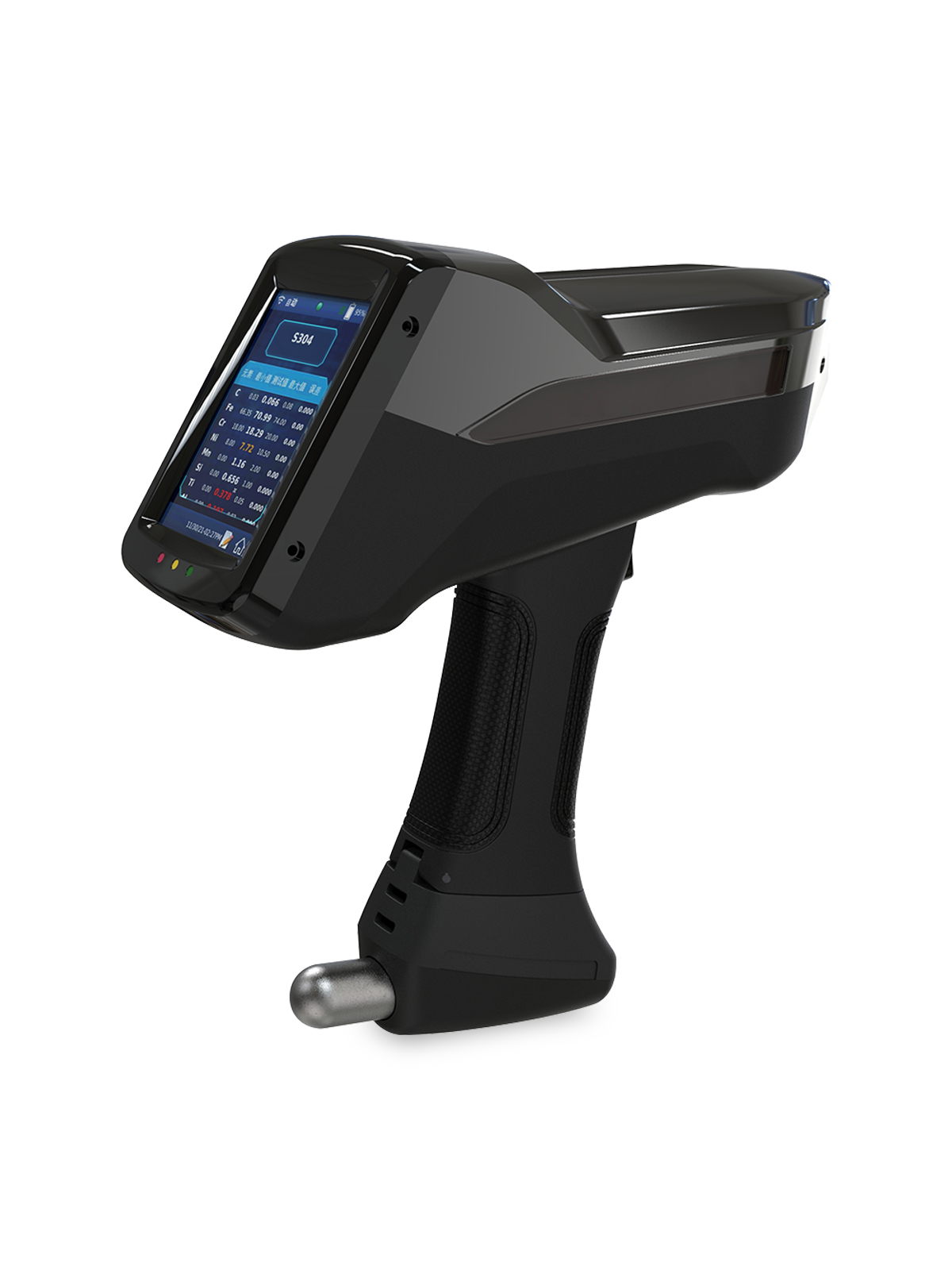
F7000 Pro Handheld LIBS Analyzer
The F7000 Pro is a handheld laser-induced breakdown spectroscopy (LIBS) analyzer for on-site identification and rapid analysis of alloy elements. Unlike X-ray-based handheld systems, LIBS uses a focused laser pulse to ablate a microscopic sample and read its emission spectrum — so it measures light elements that XRF cannot, including beryllium and magnesium, with no ionizing radiation.
Specifications
| Laser class | Class 3B laser, high-energy pulse (eye-safe in normal use) |
|---|---|
| Elements analyzed | Be, Mg, Al, Si, Ti, Cr, Mn, Fe, Ni, Cu, Zn, Cd, Sn, Pb, Bi, Mo, V, Nb, W |
| Analyzing time | < 1 second per measurement |
| Weight | 1.25 kg (including battery) |
| Operating temp / humidity | Optical and mechanical safety switches required for activation |
Typical applications
- Aluminum alloy sorting where magnesium and silicon levels matter
- Beryllium detection in copper alloys (safety screening)
- Battery and lithium-related material identification
- Light-element verification in casting and forging
- Replacing radioactive XRF in regions with strict import controls
JIEBO Instrument · Quote desk
Request a formal quote
Send your application details and our engineers will reply with model advice, lead time and pricing.
Comparisons including this model
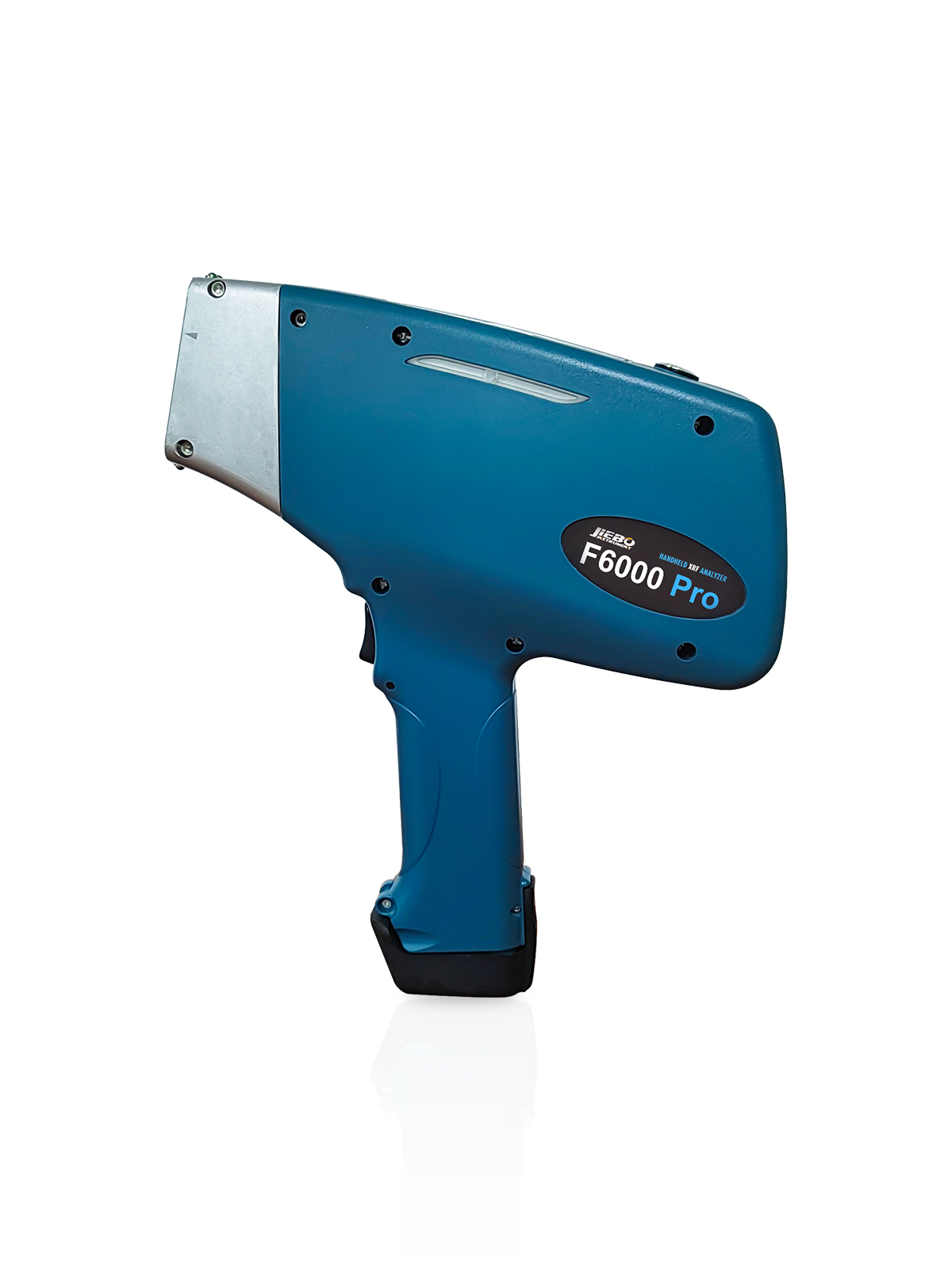
F6000 Pro (XRF) vs F7000 Pro (LIBS)
F6000 Pro (XRF) vs F7000 Pro (LIBS) — JIEBO handheld analyzer comparison
Side-by-side comparison of JIEBO F6000 Pro handheld XRF and F7000 Pro handheld LIBS: element coverage, destructive vs non-destructive operation, radiation vs laser safety, and when to choose each for scrap, PMI and aerospace work.
Surpass F1 (Mobile OES) vs F7000 Pro (Handheld LIBS)
Surpass F1 (Mobile OES) vs F7000 Pro (Handheld LIBS) — portable metal analyzer comparison
Side-by-side comparison of JIEBO Surpass F1 (mobile cart-mounted spark OES) and F7000 Pro (handheld LIBS): light-element accuracy, argon vs no-argon operation, weight and reach, sample preparation requirements, and when each fits a field-PMI workflow.
Frequently asked questions
LIBS vs XRF — which should I choose?
LIBS measures light elements (Li, Be, Mg, Al, Si) that XRF cannot. LIBS leaves a tiny burn mark while XRF is fully non-destructive. LIBS uses a laser — no ionizing radiation — which simplifies regulatory paperwork in many export markets. Choose XRF for non-destructive identification of heavy alloys; choose LIBS for light-element accuracy or radiation-sensitive deployments.
How small is the laser mark on the sample?
Sub-millimeter, comparable to a single OES spark. Most receiving inspections and PMI workflows treat this as non-destructive in practice.
What about laser safety?
Class 3B with multiple safeguards: a mechanical/optical safety switch requires sample contact before firing, and the laser is automatically collimated to limit eye exposure. Standard laser-safety training and goggles are recommended for the operator.
Is the F7000 Pro fast enough for production sorting?
Yes. Sub-second readouts make it competitive with handheld XRF on alloy ID, and faster on light-element work where XRF cannot quantify at all.