Compare · OES Spectrometers
Innovate T5 (Benchtop OES) vs F6000 Pro (Handheld XRF) — choose the right metal analyzer
The choice between a benchtop spark OES like the Innovate T5 and a handheld XRF like the F6000 Pro is not "which is better" — it's "which problem are you solving." The T5 is a fixed lab instrument that measures everything including the light elements (C, S, P, B) that decide steel grade, with ppm-level accuracy good enough for certification. The F6000 Pro is a 50 kV X-ray gun that walks to the part: sub-second alloy ID, fully non-destructive, but blind to carbon and the other light elements. Most mature foundries and PMI shops run both: handheld for receiving and warehouse sorting, benchtop OES for melt control and final certification.
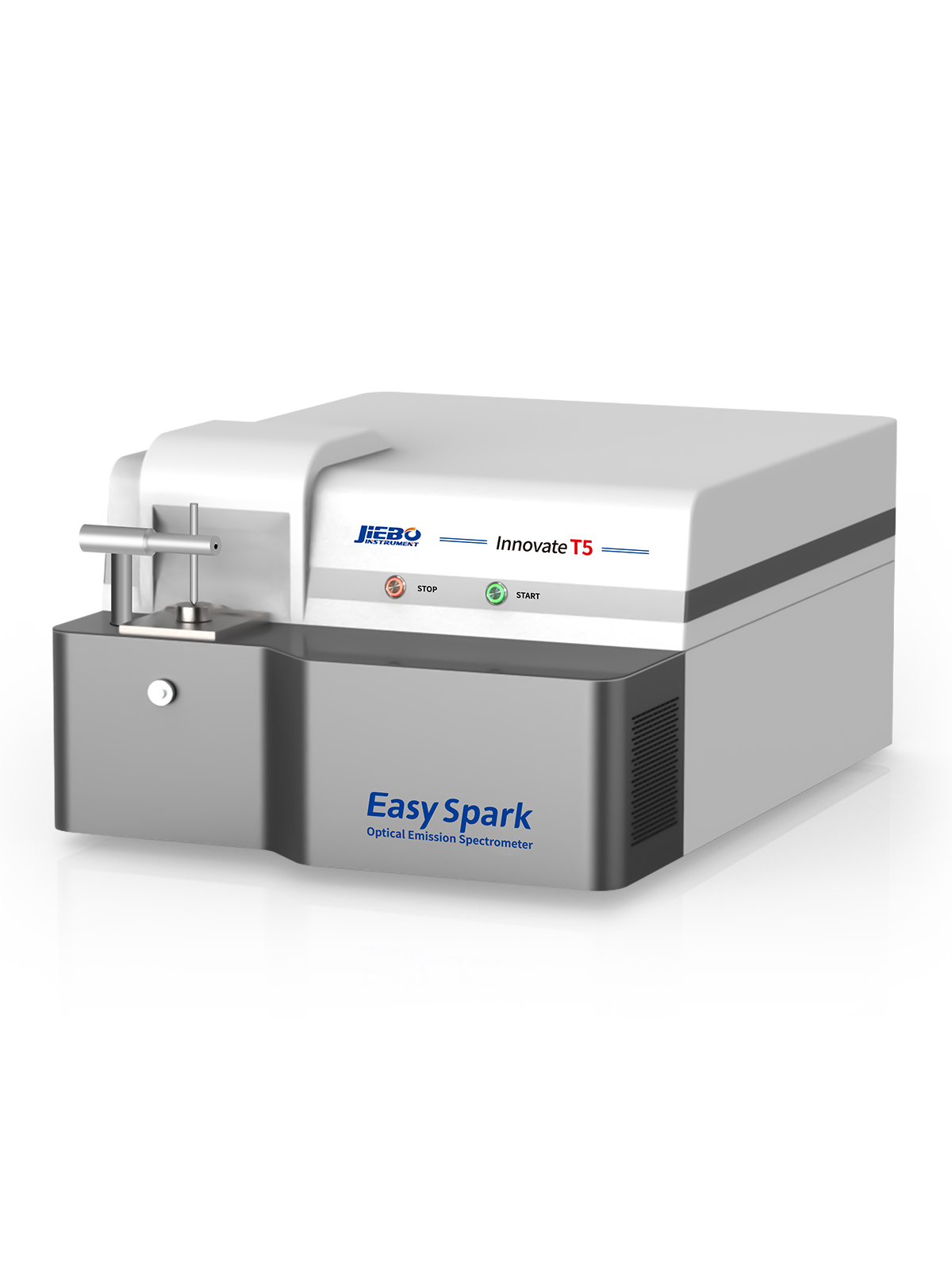
JIEBO-T5
Innovate T5 (Benchtop OES)
Benchtop spark OES — 78 kg, vacuum optics, ppm-level accuracy, reads C/S/P/B
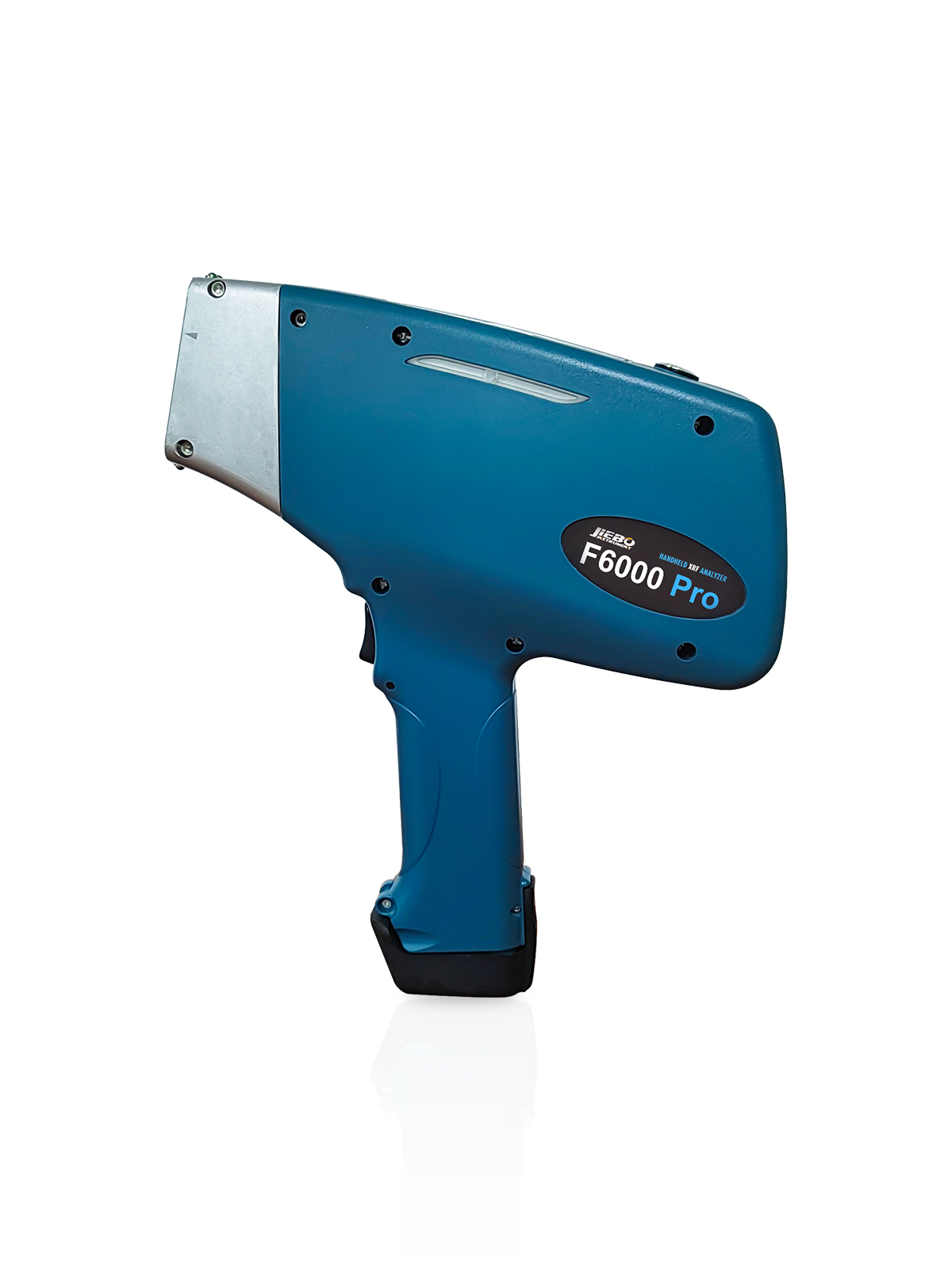
JIEBO-F6000
F6000 Pro (Handheld XRF)
Handheld XRF gun — fully non-destructive, sub-second alloy ID, Ti to U only
Specifications
| Innovate T5 (Benchtop OES) | F6000 Pro (Handheld XRF) | |
|---|---|---|
| Test methods | Spark optical emission (destructive — leaves small burn marks) | X-ray fluorescence (fully non-destructive) |
| Elements analyzed | Full periodic-table coverage including C, S, P, B, N | Ti to U only (no Li, Be, B, C, N, Mg) |
| Wavelength range | 140–680 nm optical spectrum | X-ray fluorescence lines (no optical spectrum) |
| Detection limit | Single-digit ppm with good calibration | Typically ~50 ppm depending on element and matrix |
| Analyzing time | Tens of seconds per spark burn | 1–5 s per measurement |
| Weight | 78 kg benchtop | Handheld gun form factor |
| Operating temp / humidity | Argon supply + 220 V mains + climate-controlled room | Battery operation up to 50 °C, no consumables |
| Best for | Melt-control, final certification, light-element grades | Field PMI, scrap sorting, finished-component verification |
When to choose which
Choose Innovate T5 (Benchtop OES) when
- You need carbon, sulfur, phosphorus or boron quantified — these are the elements that decide a steel grade, and XRF physics cannot read them
- Your QA method or customer specification requires ppm-level accuracy and full optical spectrum coverage
- You run a fixed lab or melt shop where the sample comes to the instrument (cuttings, disks, drillings)
- You need certification-grade output — ASTM E1086, E415, ISO standards typically require spark OES
Choose F6000 Pro (Handheld XRF) when
- You inspect finished components, customer-owned material, or in-service equipment that cannot tolerate even a small spark mark
- Your element list lives above titanium — stainless, mold steel, brass, bronze, nickel alloys, precious metals — and carbon is not required
- You need the analyzer to travel: scrap yards, warehouses, pipework, construction sites, multiple receiving docks
- Speed and ease of use win over accuracy: sub-second alloy grade ID for high-volume sorting, with operator training measured in hours not days
Frequently asked questions
Why can't XRF measure carbon?
X-ray fluorescence detects the secondary X-rays emitted when an atom's inner electrons are knocked out. The energy of those X-rays drops below the detector's usable window for light elements (Z < 22 roughly), and air or the sample's own surface absorbs what remains. Spark OES uses a different physical process (optical emission from an arc plasma) that does measure these elements down to ppm.
Can the F6000 Pro give me a steel grade without carbon?
It can give an alloy family match for stainless, tool steels, brass, etc., and is enough for most receiving inspection. But for grades that are differentiated by carbon (e.g. 1018 vs 1045 carbon steel, low-carbon vs medium-carbon cast iron) you need spark OES — XRF cannot tell them apart.
Should I buy an Innovate T5 first, or an F6000 Pro first?
If you only buy one, start with whatever matches your bottleneck. Foundries and melt shops buy the T5 first because they need carbon control. Scrap yards, warehouses and PMI inspection contractors buy the F6000 Pro first because portability and non-destructive testing are the bottleneck. Most growing operations end up owning both within 1–2 years.
What about cost of ownership?
Benchtop OES has higher upfront cost and ongoing argon consumption (~3 L/min during measurement), plus a climate-controlled room. Handheld XRF has lower upfront cost but radiation licensing in some countries and routine X-ray tube service. Over 5 years, the operational gap narrows; total ownership is dominated by how many samples you actually run.