
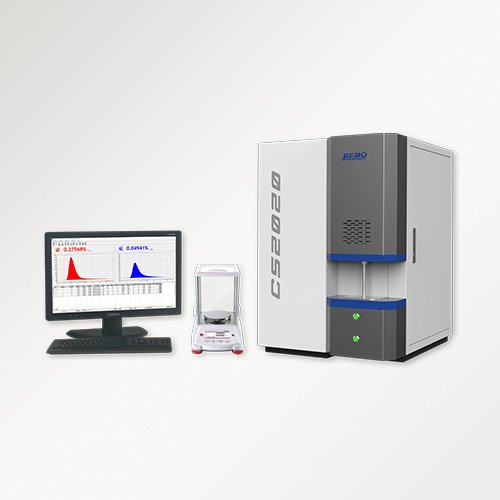
Product Overview
The CS2020 Carbon Sulfur Analyzer is JIEBO's most advanced combustion-infrared platform, engineered for laboratories that require broad analytical coverage, exceptional sensitivity, and modern connectivity in a single instrument. Equipped with dual independent infrared detectors expandable to four detection cells, the CS2020 simultaneously covers low and high concentration ranges for both carbon and sulfur -- eliminating the need for manual range selection or separate instruments for trace and bulk analysis.
With a sensitivity of 0.1 ppm for both carbon and sulfur, the CS2020 addresses the most demanding low-level measurements in specialty steel production, superalloy manufacturing, and advanced materials research. The 20 MHz, 2.3 kW high-frequency induction furnace ensures complete combustion of a wide spectrum of sample types, from conventional carbon steel to refractory ceramics and geological specimens.
What sets the CS2020 apart from conventional analyzers is the SmartLINE Remote Diagnostic System, which enables JIEBO's service engineers to monitor instrument status, diagnose faults, and guide troubleshooting remotely. Combined with constant-temperature detection, automatic cleaning cycles, and vacuum dust removal, the CS2020 is designed for sustained, low-maintenance operation in high-throughput environments.
Key Features
Dual Independent Infrared Detection System
The CS2020 ships with two independent infrared detectors -- one optimized for carbon and one for sulfur -- each covering both low and high concentration ranges (C1/C2 and S1/S2). The system supports expansion to four detection cells for applications that require dedicated detectors for each range.
0.1 ppm Sensitivity for Carbon and Sulfur
A sensitivity of 0.1 ppm for both carbon and sulfur enables the CS2020 to quantify trace concentrations in ultra-pure metals, electronic-grade materials, and advanced alloys where even single-ppm differences in composition can affect material properties.
SmartLINE Remote Diagnostic System
The integrated SmartLINE system connects the CS2020 to JIEBO's service network, providing real-time instrument health monitoring, remote fault diagnosis, and guided troubleshooting. This reduces service response times and minimizes unplanned downtime.
Automatic Cleaning and Vacuum Dust Removal
Built-in automatic cleaning cycles and a vacuum dust removal system keep the combustion and detection pathways clear of particulate contamination. These automated maintenance functions extend the interval between manual cleanings.
Constant-Temperature Detection
All infrared detection cells operate under constant-temperature control, eliminating baseline drift and sensitivity variation caused by fluctuating ambient temperatures.
Technical Specifications
| Parameter | Specification |
|---|---|
| High-Frequency Furnace | 2.3 kW, 20 MHz |
| Carbon Range -- Low (C1) | 0.0002% -- 0.5% |
| Carbon Range -- High (C2) | 0.1% -- 50% |
| Sulfur Range -- Low (S1) | 0.0002% -- 0.5% |
| Sulfur Range -- High (S2) | 0.1% -- 50% |
| Carbon Sensitivity | 0.1 ppm |
| Sulfur Sensitivity | 0.1 ppm |
| Carbon Precision | 1 ppm or RSD ≤ 1.0% |
| Sulfur Precision | 1 ppm or RSD ≤ 1.5% |
| IR Detection | Dual independent detectors (expandable to 4 cells) |
| Temperature Control | Constant-temperature detection system |
| Maintenance Features | Auto cleaning, vacuum dust removal |
| Remote Diagnostics | SmartLINE Remote Diagnostic System |
| Applicable Materials | Iron, steel, cast iron, copper, ore, cement, ceramics, glass, superalloys |
Applications
Specialty Steel and Superalloy Manufacturing -- Measure carbon and sulfur at sub-ppm levels in high-value materials where composition tolerances are extremely tight.
Iron and Steel Production Control -- Cover the full range from ultra-low-carbon steels (C1 range) to high-carbon cast irons (C2 range) without switching instruments.
Non-Metallic Materials Testing -- Analyze carbon and sulfur in ores, cement, ceramics, and glass, supporting industries beyond metals with the same instrument platform.
Copper and Non-Ferrous Alloy Analysis -- Determine trace sulfur in copper and other non-ferrous alloys, where sulfur contamination at low levels can degrade electrical conductivity and mechanical properties.
Multi-Site Laboratory Networks -- The SmartLINE Remote Diagnostic System makes the CS2020 particularly well suited for organizations operating multiple laboratories, enabling centralized instrument management.
Quality and Certifications
- ISO 9001 -- Quality Management System
- ISO 14001 -- Environmental Management System
- CE Marking -- European Conformity
- ROHS Compliant -- Restriction of Hazardous Substances
- SGS Certified -- Independent third-party verification
Video Demo
Frequently Asked Questions
What advantage does dual-range detection provide?
Dual-range detection uses separate optimized detector paths for low and high concentrations. This avoids the linearity and sensitivity compromises inherent in stretching a single detector across a wide concentration span. The result is better accuracy at both trace and percent levels.
How does the SmartLINE Remote Diagnostic System work?
SmartLINE connects the CS2020 to JIEBO's service infrastructure via a secure network connection. Service engineers can remotely view instrument status data, run diagnostic routines, and provide guided troubleshooting instructions. Many issues can be resolved remotely.
Can the CS2020 analyze non-metallic samples?
Yes. The CS2020 is validated for a broad range of inorganic materials including iron, steel, cast iron, copper alloys, ores, cement, ceramics, glass, and superalloys.
What is the difference between the CS2020 and the CS996?
The CS2020 offers wider individual measurement ranges (C2 to 50%, S2 to 50%), higher sensitivity (0.1 ppm), built-in SmartLINE remote diagnostics, automatic cleaning, and vacuum dust removal. It is designed for laboratories that need the broadest analytical coverage and the most automated operation.
What gas supply is required?
The CS2020 requires high-purity oxygen for combustion (99.5% minimum, 99.9% or higher recommended).