
Product Overview
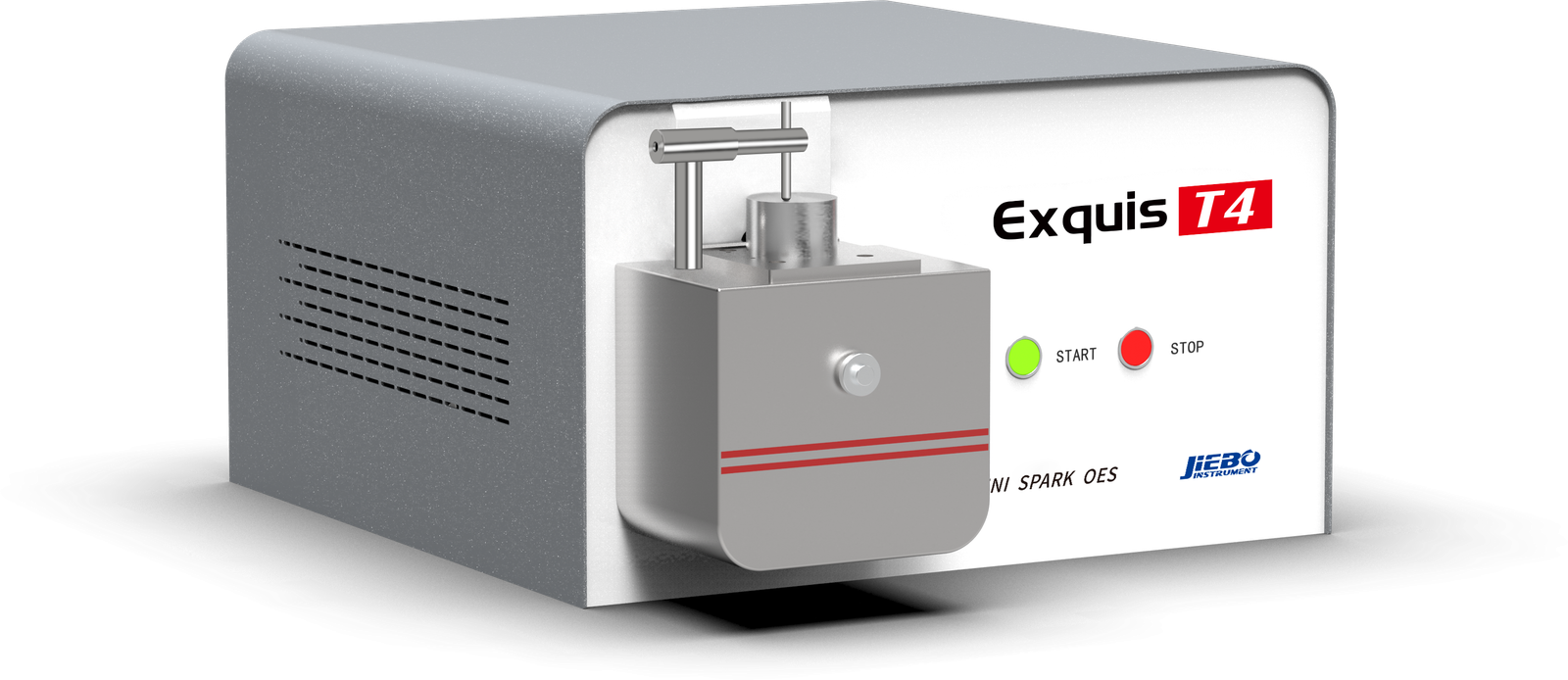
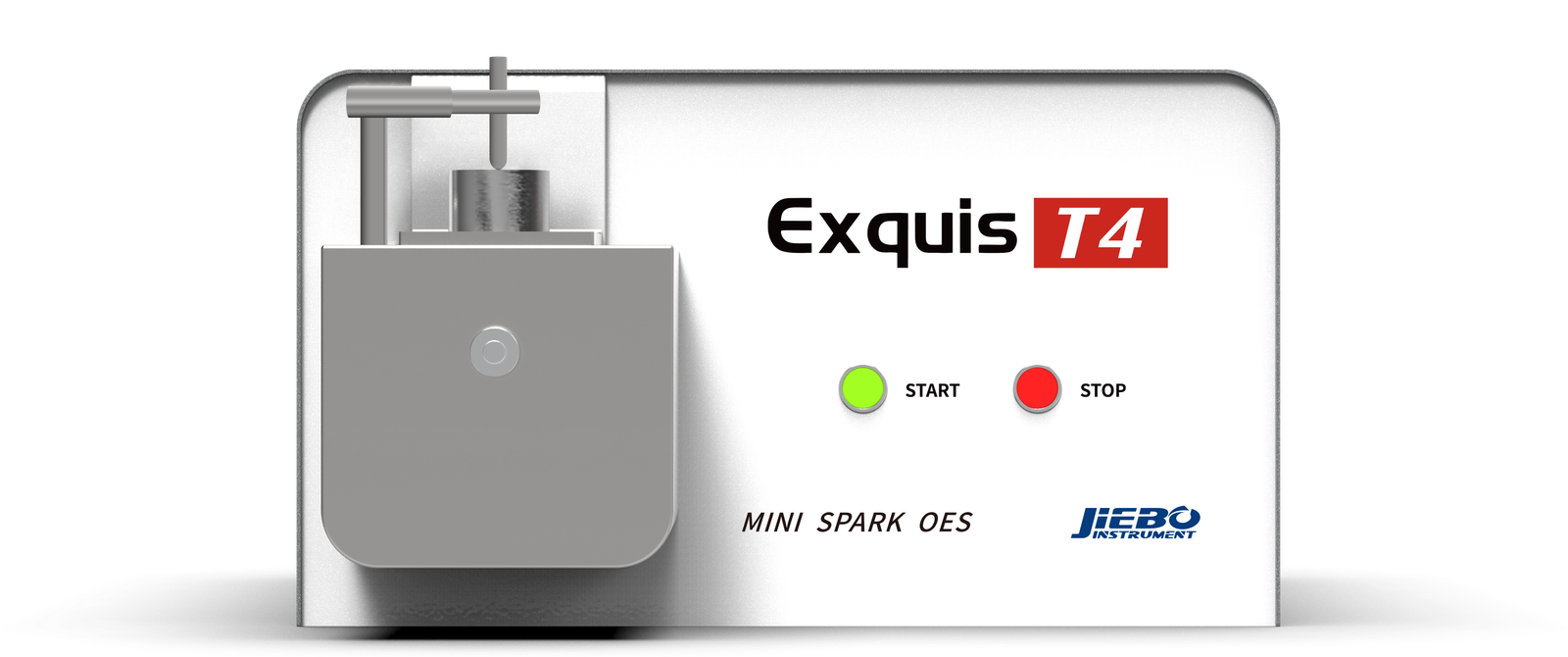
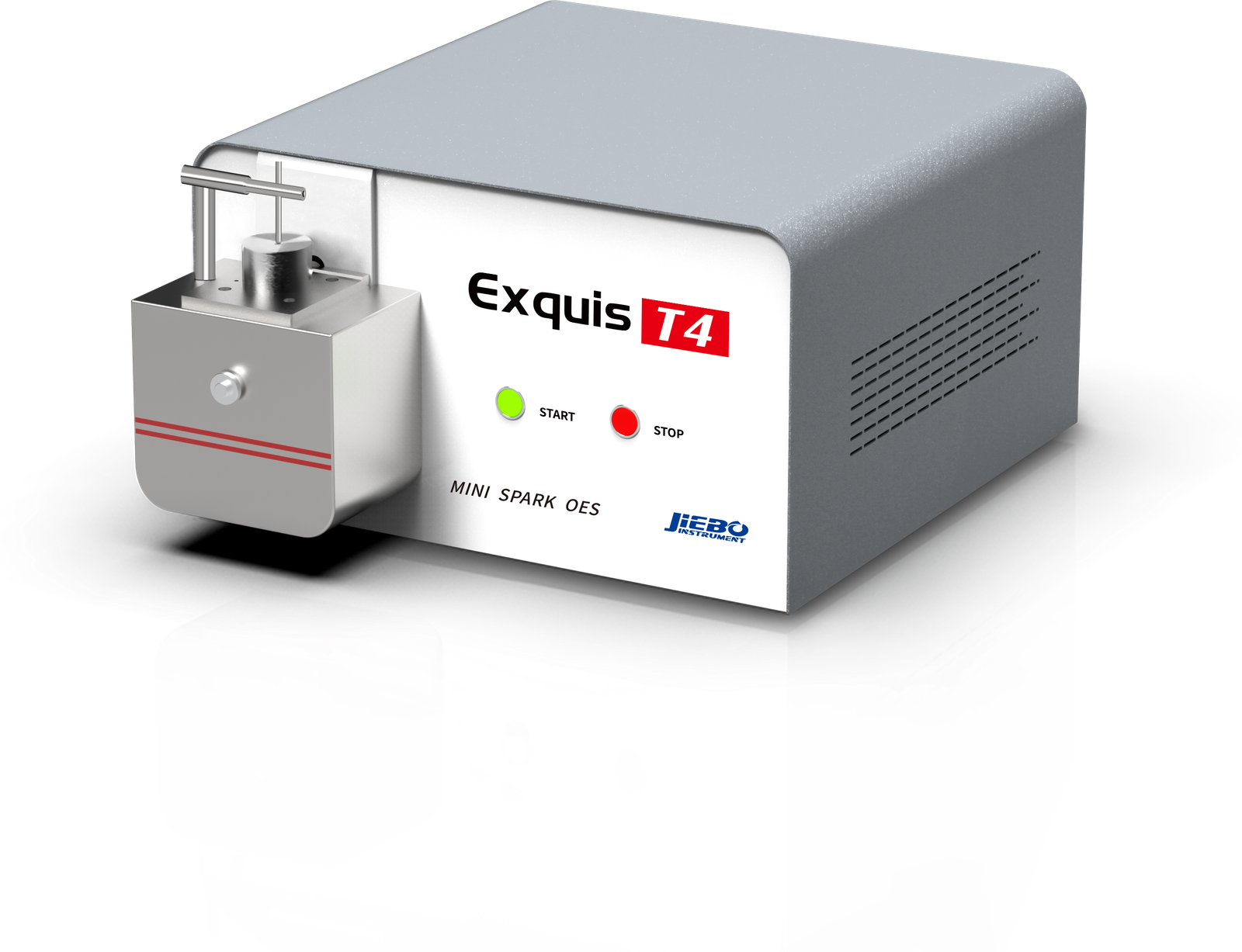
The JIEBO Exquis T4 Mini Spark Optical Emission Spectrometer delivers laboratory-grade elemental analysis in a compact, benchtop-friendly form factor weighing just 33 kg. Engineered for quality control laboratories, foundries, and incoming material inspection departments that demand precise multi-element analysis without the floor space or budget commitment of a full-size instrument, the T4 Mini combines proven spark discharge excitation with a full-spectrum CMOS detector array to cover wavelengths from 160 nm to 580 nm in a single measurement.
At the core of the T4 Mini is a HAMAMATSU (Japan) full-spectrum CMOS array detector that captures every emission line across its wavelength range simultaneously. Unlike fixed-channel PMT systems that limit you to factory-selected elements, the T4 Mini records the complete optical spectrum on every spark. This architecture allows new element calibrations to be added in software without hardware modification, protecting your investment as analytical requirements evolve. The optical system incorporates precision components from Zeiss and Agilent, ensuring the resolving power and long-term stability needed to achieve detection limits down to 10 ppm and accuracy better than 0.2% relative.
JIEBO's advanced argon circulation technology sets the T4 Mini apart from competing benchtop spectrometers. By maintaining an optimized argon atmosphere within the spark stand and optical path, the instrument achieves stable excitation conditions and minimizes atmospheric interference -- particularly critical for accurate measurement of ultraviolet lines below 200 nm used for carbon, phosphorus, and sulfur analysis. The result is an instrument that punches well above its size class, delivering analytical performance that meets the daily demands of metals production, machining operations, and scrap sorting facilities.
Key Features
Full-Spectrum CMOS Detection with HAMAMATSU Sensor
The T4 Mini employs a HAMAMATSU full-spectrum CMOS array detector that captures the entire 160-580 nm wavelength range in a single spark event. Every emission line within this window is recorded simultaneously, enabling multi-line averaging, real-time spectral interference correction, and background compensation. Because the raw spectrum is always fully acquired, adding new elements or refining existing calibrations is a software-only operation -- no hardware changes, no service calls, no downtime.
Precision Optical System with Zeiss and Agilent Components
Optical performance defines spectrometer accuracy. The T4 Mini integrates diffraction optics and optical components sourced from Zeiss (Germany) and Agilent (USA), two of the most respected names in precision optics. This optical train delivers the resolution and wavelength stability required to separate closely spaced emission lines and maintain calibration integrity over extended production runs. The sealed optical room further protects against thermal drift and contamination.
Advanced Argon Circulation Technology
JIEBO's proprietary argon circulation system ensures a consistent, high-purity argon atmosphere throughout the spark stand and optical path. This technology reduces argon consumption compared to conventional flow-through designs while maintaining the gas purity needed for reliable UV-range measurements. The system requires instrument-grade argon (>99.999%) and is managed through an integrated pneumatic valve block that automates gas flow during the measurement cycle.
Seven Analyzable Base Matrices
The T4 Mini ships with calibrations for seven major alloy matrices: iron (Fe), aluminum (Al), copper (Cu), zinc (Zn), nickel (Ni), lead (Pb), and magnesium (Mg). Each matrix calibration is built using certified reference materials with ISO/IEC 17025 traceability, ensuring measurement results that hold up to audit scrutiny. This multi-matrix capability makes the T4 Mini suitable for facilities that process diverse alloy families.
Compact, Lightweight Design
At just 818 x 590 x 396 mm and 33 kg, the T4 Mini fits on a standard laboratory bench or can be positioned directly on the production floor without special foundations or dedicated floor space. The 220V/50Hz power requirement is compatible with standard industrial and laboratory electrical supplies. Despite its compact size, the instrument incorporates the same analytical architecture found in larger JIEBO spectrometers.
Intuitive Software with Calibration Management
The included analytical software provides a straightforward interface for routine measurements, calibration management, and data reporting. Operators can run standardized analysis programs with minimal training, while laboratory managers retain full control over calibration curves, quality control checks, and data export. The software supports re-calibration using the provided certified reference standards.
Technical Specifications
| Parameter | Specification |
|---|---|
| Detection Limit | 10 ppm |
| Wavelength Range | 160 -- 580 nm |
| Accuracy | < 0.2% (relative) |
| Detector | Full Spectrum CMOS Array (HAMAMATSU, Japan) |
| Analyzable Matrices | Fe, Al, Cu, Zn, Ni, Pb, Mg |
| Optical Components | Zeiss (Germany), Agilent (USA) |
| Dimensions (L x W x H) | 818 x 590 x 396 mm |
| Weight | 33 kg |
| Power Supply | 220V, 50Hz |
| Argon Requirement | > 99.999% purity (instrument grade) |
| Operating Temperature | 10 -- 30 degrees C |
| Excitation Source | Spark discharge |
| Gas Control | Integrated pneumatic valve block |
Applications
Foundry and Casting Quality Control
Foundries rely on rapid melt verification to confirm alloy composition before pouring. The T4 Mini provides the speed and accuracy needed to check incoming charge materials, verify melt chemistry, and certify final castings against customer specifications. Its seven-matrix capability covers the most common foundry alloys, from gray and ductile iron to aluminum die-casting alloys and brass.
Incoming Material Inspection
Receiving departments in manufacturing facilities use the T4 Mini to verify that incoming metal stock matches the mill certificate. Catching material mix-ups before stock enters production prevents costly machining failures, weld defects, and warranty claims. The instrument's compact size allows it to be stationed in a receiving area without disrupting workflow.
Automotive and Aerospace Component Manufacturing
Tier 1 and Tier 2 suppliers serving automotive and aerospace OEMs must demonstrate traceable material verification at every production stage. The T4 Mini's ISO/IEC 17025-traceable calibration standards and accurate elemental analysis support compliance with industry material specifications such as ASTM, SAE, and EN standards.
Scrap Metal Sorting and Recycling
Metal recyclers need to classify incoming scrap by alloy grade quickly and accurately to maximize the value of sorted material. The T4 Mini's multi-matrix capability and low detection limits allow operators to distinguish between alloy grades that appear physically identical, ensuring proper sorting and fair pricing.
Machine Shop and Job Shop Operations
Small to mid-size machine shops that receive metal bar stock, forgings, or castings from multiple suppliers benefit from having an in-house spectrometer for material verification. The T4 Mini's compact footprint and straightforward operation make it practical for facilities that lack a dedicated laboratory or full-time laboratory staff.
Precious and Non-Ferrous Metal Processing
Facilities working with copper, zinc, nickel, lead, or magnesium alloys can use the T4 Mini for process control and final product certification. The instrument's full-spectrum detection ensures that minor alloying elements and trace impurities are captured alongside major constituents.
How the T4 Mini Compares
| Feature | JIEBO T4 Mini | Entry-Level PMT OES | Handheld LIBS | Desktop XRF |
|---|---|---|---|---|
| Detection Limit | 10 ppm | 5 -- 20 ppm | 50 -- 500 ppm | 10 -- 100 ppm |
| Wavelength Range | 160 -- 580 nm (continuous) | Discrete channels only | Limited spectral range | N/A (energy dispersive) |
| Carbon / Sulfur Analysis | Yes (UV range covered) | Yes (if channels installed) | Very limited | Not possible |
| Detector Technology | Full Spectrum CMOS | Fixed-channel PMT | CMOS / CCD | SDD / Si-PIN |
| Element Flexibility | Add in software | Requires hardware | Fixed | Fixed |
| Weight | 33 kg | 80 -- 200 kg | 1.5 -- 2 kg | 15 -- 40 kg |
| Accuracy | < 0.2% | < 0.2% | 1 -- 5% | 0.5 -- 2% |
| Sample Preparation | Flat surface required | Flat surface required | Minimal | Minimal |
| Initial Investment | Moderate | High | Moderate -- High | Moderate |
Quality and Certifications
JIEBO instruments are manufactured under a quality management system certified to international standards. The Exquis T4 Mini and its production facility hold the following certifications:
- ISO 9001 -- Quality Management System
- ISO 14001 -- Environmental Management System
- CE Marking -- European Conformity
- ROHS Compliant -- Restriction of Hazardous Substances
- SGS Certified -- Independent third-party verification
All calibration reference standards supplied with the T4 Mini carry ISO/IEC 17025 traceability documentation, ensuring that your analytical results are defensible in audits and regulatory reviews.
What Is Included
- Exquis T4 Mini Spark Optical Emission Spectrometer (main unit)
- Full Spectrum CMOS Array Detector (HAMAMATSU, Japan) -- factory installed
- Sealed optical room assembly
- Integrated pneumatic valve block for argon control
- Analytical software (installed on included workstation or provided for customer installation)
- Certified calibration standards with ISO/IEC 17025 traceability certificates
- Factory calibration for selected base matrices (Fe, Al, Cu, Zn, Ni, Pb, Mg)
- Argon supply hose and regulator fittings
- Power cable (220V/50Hz)
- User manual and operating documentation
- Electrode and consumable starter kit
Video Demo
Frequently Asked Questions
What elements can the T4 Mini analyze?
The T4 Mini ships with calibrations for seven base matrices -- iron, aluminum, copper, zinc, nickel, lead, and magnesium. Within each matrix, the instrument measures major, minor, and trace elements present in the alloy. Because the full-spectrum CMOS detector captures all emission lines in the 160-580 nm range, additional element calibrations can be added in software without hardware changes.
Can the T4 Mini measure carbon and sulfur in steel?
Yes. The wavelength range extends down to 160 nm, which covers the primary emission lines for carbon (193.09 nm) and sulfur (180.73 nm). Accurate measurement of these elements requires the UV-transparent optical path maintained by the instrument's argon circulation system.
How does the T4 Mini compare to a portable or handheld spectrometer?
Portable LIBS and handheld XRF instruments offer field convenience but cannot match the detection limits, accuracy, or element range of a benchtop spark OES. The T4 Mini achieves 10 ppm detection limits and < 0.2% accuracy, which is an order of magnitude better than most portable analyzers. For laboratories and production environments where analytical quality matters, a stationary spark OES remains the standard.
What argon purity is required?
The T4 Mini requires instrument-grade argon with a minimum purity of 99.999% (5N). Lower purity argon introduces molecular absorption bands that degrade UV transmission and compromise detection limits for carbon, sulfur, phosphorus, and nitrogen. Using industrial-grade argon is not recommended and may void calibration warranties.
How much does argon consumption cost to operate?
The advanced argon circulation technology in the T4 Mini reduces gas consumption compared to conventional flow-through designs. Typical consumption varies by measurement frequency, but most users find that a standard argon cylinder lasts several weeks of regular production use. Contact JIEBO for consumption estimates based on your specific throughput requirements.
Does the instrument require special installation?
No special foundations or vibration isolation are required. The T4 Mini needs a stable, level bench or table capable of supporting 33 kg, a 220V/50Hz power outlet, and an argon gas supply line. The operating environment should be maintained between 10 and 30 degrees C with reasonable humidity control. JIEBO provides installation and commissioning support.
What ongoing maintenance is needed?
Routine maintenance includes cleaning the spark stand electrode, replacing consumable counter-electrodes, and performing periodic re-standardization using the provided reference materials. The sealed optical room minimizes the need for optical cleaning. JIEBO offers service contracts and remote diagnostic support for customers who require guaranteed uptime.
How long does a typical analysis take?
A complete multi-element analysis, from spark initiation to results display, typically takes 20 to 40 seconds depending on the analytical program and the number of pre-burn and integration sparks configured. This cycle time supports high-throughput quality control workflows.