
Product Overview
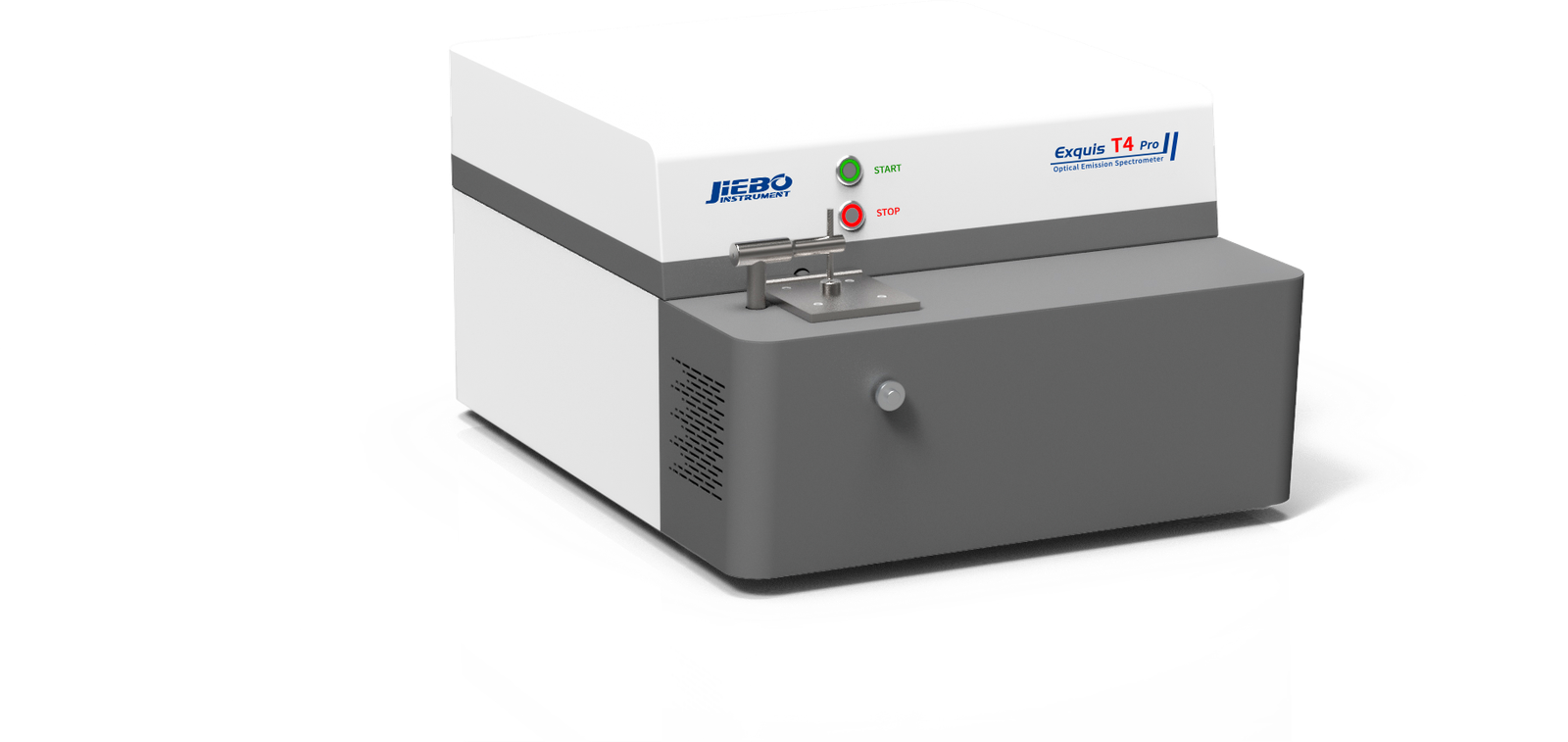
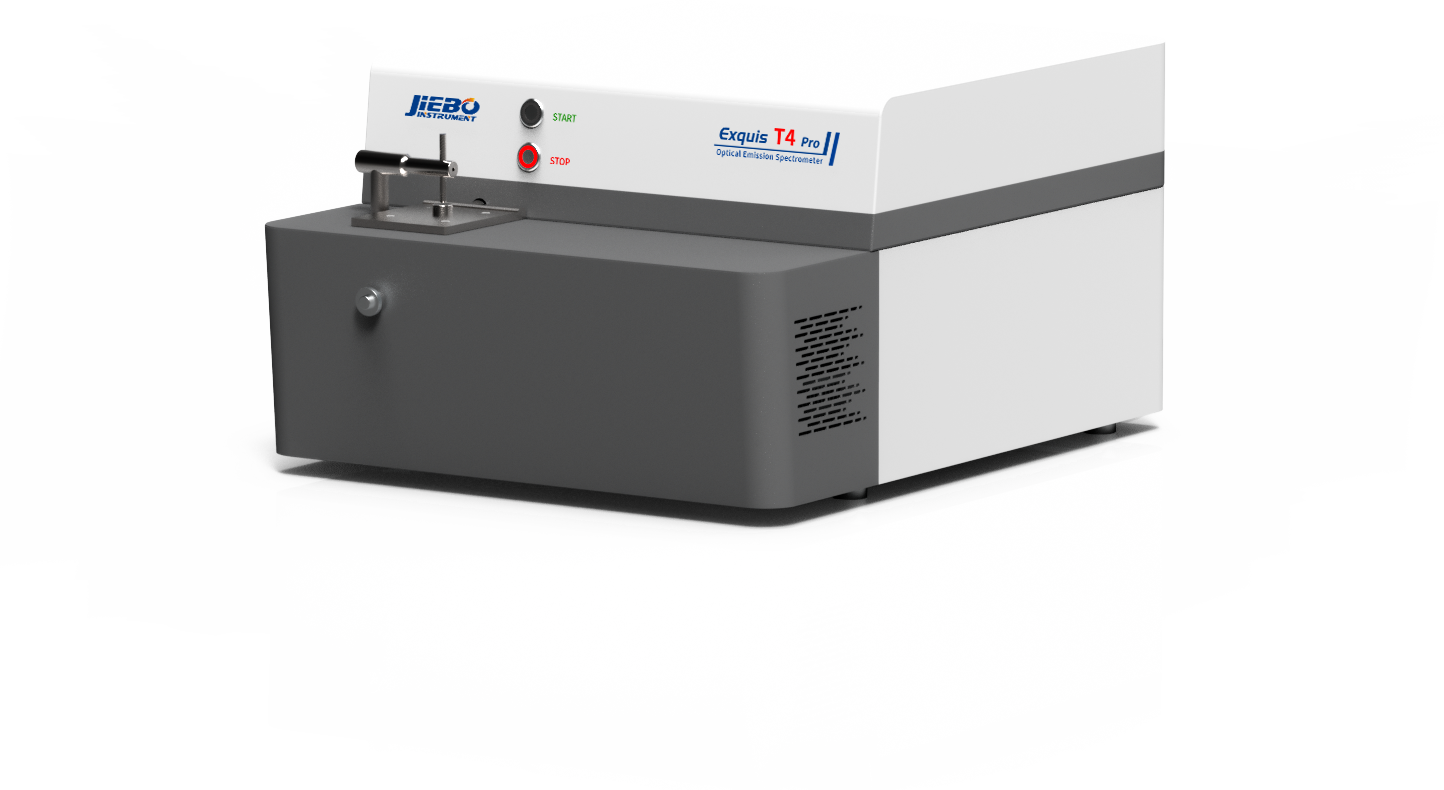
The Exquis T4 Pro is JIEBO's full-spectrum optical emission spectrometer engineered for laboratories and production floors that demand rapid, reliable elemental analysis across multiple alloy bases. Built around a high-performance 4096-pixel CMOS array detector and a 401mm focal length optical system, the T4 Pro covers a continuous wavelength range of 140 to 680 nanometers -- broad enough to capture the critical analytical lines for iron, aluminum, copper, zinc, nickel, magnesium, titanium, tin, and lead alloys in a single instrument.
Where many entry-level spectrometers compromise on either speed or spectral coverage, the T4 Pro delivers both. A complete multi-element analysis takes approximately 20 seconds from spark to result, and the sealed-cycle optical chamber ensures that vacuum-ultraviolet wavelengths essential for carbon, phosphorus, sulfur, and nitrogen determination remain accessible without degradation from atmospheric contamination. This sealed design also reduces argon consumption and extends the service life of internal optics, translating directly into lower operating costs over the instrument's lifetime.
The T4 Pro integrates JIEBO's digital high-energy pre-burn technology, which conditions the sample surface electronically before the analytical spark sequence begins. This approach eliminates surface contamination effects that would otherwise distort trace-element readings, producing cleaner burn spots and more reproducible data without requiring excessive sample preparation. Combined with a tungsten jet electrode system and automatic argon pressure control, the T4 Pro is built to operate continuously in demanding industrial environments where uptime and consistency are non-negotiable.
Key Features
Full Spectrum Wavelength Coverage (140--680nm)
The T4 Pro's optical system spans from the deep vacuum ultraviolet at 140nm through the visible spectrum to 680nm. This unbroken range captures analytically important lines for light elements such as carbon (156nm), sulfur (180nm), and phosphorus (178nm), alongside the emission lines of major alloying elements and trace constituents. A single optical path means no wavelength gaps and no need to switch between separate optical modules during analysis.
High-Resolution 4096-Pixel CMOS Array Detector
At the core of the T4 Pro sits a high-performance CMOS array detector with 4096 discrete pixels. This solid-state design delivers simultaneous full-spectrum acquisition -- every analytical wavelength is captured in each spark event, enabling true multi-element analysis without sequential scanning. The CMOS architecture provides excellent signal-to-noise performance, low dark current, and the long-term stability that production laboratories require for day-to-day repeatability. Unlike photomultiplier tubes, the array detector has no moving parts and requires no high-voltage power supplies, reducing both maintenance and failure risk.
Digital High-Energy Pre-Burn Technology
Surface contamination from machining fluids, oxide layers, and environmental exposure is one of the leading sources of analytical error in spark OES. The T4 Pro addresses this with a digitally controlled high-energy pre-burn phase that strips away surface layers before measurement begins. The pre-burn parameters -- including discharge frequency (adjustable from 100 to 1000Hz) and current intensity (up to 400A peak) -- are automatically optimized for each analytical program, ensuring that the measurement spark sees only representative bulk material regardless of sample preparation quality.
Sealed-Cycle Optical Chamber
The optical chamber of the T4 Pro is hermetically sealed and maintained under a controlled atmosphere. This sealed-cycle design prevents oxygen and moisture from entering the light path, which would absorb vacuum-UV radiation and degrade performance for light-element channels. The result is stable baselines, consistent sensitivity for carbon and sulfur determination, and significantly reduced purge gas consumption compared to continuously flushed optical systems. The chamber requires no routine user intervention and is designed for years of maintenance-free operation.
Tungsten Jet Electrode with Automatic Pressure Control
The T4 Pro uses a precision-machined tungsten jet electrode paired with an automatic argon pressure regulation system. Tungsten's high melting point and low sputter rate ensure consistent spark conditions over thousands of analyses, extending electrode life and reducing consumable costs. The automatic pressure control system continuously monitors and adjusts argon flow -- 3.5 liters per minute during spark analysis and just 0.1 liters per minute in standby mode -- ensuring optimal spark atmosphere without operator intervention. Integrated communication monitoring alerts the operator if gas supply parameters deviate from specification.
Compact Benchtop Form Factor
At 65 x 53 x 33 centimeters and 45 kilograms, the T4 Pro fits comfortably on a standard laboratory bench or production-floor workstation. Despite its compact footprint, the instrument incorporates a full 401mm focal length Paschen-Runge optical mount -- the same optical geometry used in much larger spectrometers -- delivering resolving power that belies its size. The 400W power consumption on standard AC220V supply means no special electrical infrastructure is required for installation.
Technical Specifications
| Parameter | Specification |
|---|---|
| Detectable Alloy Bases | Fe, Al, Cu, Zn, Ni, Mg, Ti, Sn, Pb |
| Wavelength Range | 140 -- 680 nm |
| Focal Length | 401 mm |
| Detector | High-performance CMOS array, 4096 pixels |
| Optical Chamber | Sealed-cycle design |
| Electrode | Tungsten jet electrode |
| Pre-Burn Technology | Digital high-energy pre-burn |
| Discharge Frequency | 100 -- 1000 Hz (adjustable) |
| Maximum Discharge Current | 400 A |
| Analysis Time | Approx. 20 seconds |
| Analysis Gap | 4 mm |
| Argon Consumption (Spark) | 3.5 L/min |
| Argon Consumption (Standby) | 0.1 L/min |
| Pressure Control | Automatic with communication monitoring |
| Power Supply | AC 220V, 50/60 Hz |
| Power Consumption | 400 W |
| Dimensions (W x D x H) | 65 x 53 x 33 cm |
| Weight | 45 kg |
Applications
Ferrous Metallurgy and Steel Production
The T4 Pro excels in steel mills, foundries, and forging operations where rapid heat-by-heat analysis of carbon steel, stainless steel, tool steel, and cast iron grades is essential for process control. Its full-spectrum coverage captures carbon, silicon, manganese, chromium, nickel, molybdenum, vanadium, and trace elements in a single 20-second measurement, enabling real-time melt adjustments that reduce off-grade production.
Aluminum and Light Alloy Analysis
Aluminum smelters, die casters, and extrusion plants rely on tight compositional control of silicon, magnesium, copper, zinc, iron, manganese, and titanium. The T4 Pro's CMOS detector provides the resolution needed to separate closely spaced aluminum emission lines and deliver accurate results across wrought and cast alloy series from 1xxx through 7xxx.
Copper and Brass Quality Control
For copper refineries, wire and cable manufacturers, and brass foundries, the T4 Pro measures tin, lead, zinc, nickel, iron, phosphorus, and other trace elements critical to conductivity, machinability, and corrosion resistance specifications. The digital pre-burn system is particularly effective on copper alloys, where surface oxidation can rapidly compromise analytical accuracy.
Incoming Material Verification
Quality laboratories performing incoming inspection of raw materials, semi-finished products, and supplier shipments use the T4 Pro to verify material certificates against actual composition. The instrument's multi-base capability -- nine alloy bases in a single unit -- eliminates the need for separate instruments or outsourced testing, reducing verification turnaround from days to minutes.
Scrap Sorting and Recycling
Metal recyclers and scrap processors use the T4 Pro to classify mixed alloy streams by grade, maximizing the value of sorted material. The fast 20-second analysis time enables high-throughput sorting workflows, and the instrument's ability to handle zinc, tin, lead, and magnesium bases makes it versatile enough for complex mixed-metal operations.
Automotive and Aerospace Component Manufacturing
Tier 1 and Tier 2 suppliers serving the automotive and aerospace sectors face stringent material traceability requirements. The T4 Pro provides the documented, instrument-verified composition data needed to satisfy OEM specifications, IATF 16949, and AS9100 quality management systems.
Model Comparison
| Feature | Exquis T4 Pro | Exquis T4 Mini | InnovateT5 |
|---|---|---|---|
| Alloy Bases | 9 (Fe, Al, Cu, Zn, Ni, Mg, Ti, Sn, Pb) | 7 (Fe, Al, Cu, Zn, Ni, Pb, Mg) | 9+ |
| Wavelength Range | 140 -- 680 nm | 160 -- 580 nm | 140 -- 680 nm |
| Detector | CMOS, 4096 pixels | CMOS (HAMAMATSU) | CMOS, advanced |
| Focal Length | 401 mm | N/A | 401 mm |
| Analysis Time | ~20 seconds | ~25 seconds | ~15 seconds |
| Pre-Burn Technology | Digital high-energy | Standard digital | Digital high-energy |
| Optical Chamber | Sealed-cycle | Argon circulation | Vacuum |
| Weight | 45 kg | 33 kg | 78 kg |
| Best For | Multi-base labs, mid-to-high volume | Single-base or budget labs | High-throughput, demanding trace analysis |
Quality and Certifications
Every Exquis T4 Pro is manufactured under JIEBO's ISO 9001-certified quality management system and undergoes a comprehensive factory acceptance test before shipment. Each instrument is calibrated against certified reference materials traceable to international standards (BAM, NIST, BAS) and ships with a detailed calibration report documenting performance on delivered analytical programs.
- ISO 9001 -- Quality Management System
- ISO 14001 -- Environmental Management System
- CE Marking -- European Conformity
- ROHS Compliant -- Restriction of Hazardous Substances
- SGS Certified -- Independent third-party verification
What's Included
- Exquis T4 Pro spectrometer main unit
- Tungsten jet electrode (installed) plus spare electrode set
- Argon gas regulator and tubing kit
- Sample clamp and spark stand assembly
- Standard reference samples for delivered alloy programs
- Power cable and grounding kit
- USB and network communication cables
- Analytical software (pre-installed on instrument PC)
- Operation manual and calibration certificate
- Factory acceptance test report
Video Demo
Frequently Asked Questions
How many alloy bases can the T4 Pro analyze?
The T4 Pro ships with analytical programs for up to nine alloy bases: iron, aluminum, copper, zinc, nickel, magnesium, titanium, tin, and lead. Each base includes calibrations for the most commonly specified alloying and trace elements. Additional custom programs can be developed for specialized alloy grades upon request.
What sample preparation is required?
The T4 Pro requires a flat, ground, or machined sample surface. For most ferrous and non-ferrous alloys, a belt grinder or disc sander producing a surface finish of approximately 60 to 120 grit is sufficient. The digital high-energy pre-burn further conditions the surface automatically, reducing the impact of minor preparation inconsistencies.
How often does the instrument need recalibration?
Under normal operating conditions, the T4 Pro maintains calibration stability for extended periods thanks to its sealed optical chamber and thermally stable optical mount. JIEBO recommends a standardization check at the start of each shift using the provided reference samples. Full recalibration is typically performed during scheduled annual maintenance visits.
What are the ongoing consumable costs?
The primary consumables are argon gas and electrodes. At 3.5 liters per minute during analysis and 0.1 liters per minute in standby, argon consumption is moderate. The tungsten jet electrode is designed for long service life -- thousands of sparks between replacements. There are no photomultiplier tubes, detector gases, or expensive optical filters to replace.
Can the T4 Pro measure carbon and sulfur in steel?
Yes. The sealed-cycle optical chamber maintains a controlled atmosphere that transmits vacuum-ultraviolet wavelengths down to 140nm, which is essential for the carbon line at 156nm and the sulfur line at 180nm. This is a significant advantage over instruments with flushed or partially sealed optics, which often lose sensitivity at these short wavelengths.
Does the instrument require a dedicated argon supply?
The T4 Pro operates on standard high-purity argon (99.999% recommended). A standard gas cylinder with an appropriate regulator is sufficient for most installations. The instrument's automatic pressure control system monitors supply pressure and flow, and the communication monitoring feature alerts the operator if gas parameters fall outside acceptable limits.
How does the T4 Pro compare to portable OES analyzers?
Portable OES instruments such as the Surpass F1 Mobile are designed for on-site, in-field analysis where bringing the sample to the lab is impractical. The T4 Pro, as a stationary benchtop instrument, delivers superior wavelength coverage, better detection limits, higher analytical precision, and multi-base versatility. Most laboratories use a stationary instrument like the T4 Pro as their primary reference and a portable unit for field verification.
What software is included?
The T4 Pro ships with JIEBO's analytical software suite, which includes instrument control, calibration management, analytical program selection, statistical analysis, and data export functions. The software supports integration with LIMS platforms and can output results in standard formats for quality documentation and traceability.